
🔮 #BlessingSeries Issue 30 - When the Rain Falls on Everyone, Not Everyone Gets Dry
An Igbo proverb, a rainy school morning, and a timeless lesson for UX design and AI

There is an adage in Igboland that says: “Oke soro ngwere maa mmiri, ọkọọ ngwere, ọ ga-akọ oke.”
Its English translation is simple but piercing: “When both the rat and the lizard are drenched in the rain, if the lizard manages to dry off, will the rat also dry off?
The deeper meaning is even more powerful:
Just because someone can overcome a challenge does not mean another person can too, because their circumstances are different. It’s recommended to be careful when copying what others are doing. The copycat may suffer consequences, while others can escape.
This proverb came alive for me recently, and I urge you to read and learn from this story.
A Rainy Morning That Turned Into a UX Lesson
Last week, it rained heavily over here. You know that kind of rain that soaks the ground, floods the corners of sidewalks, and turns school entrances into shallow pools of water.
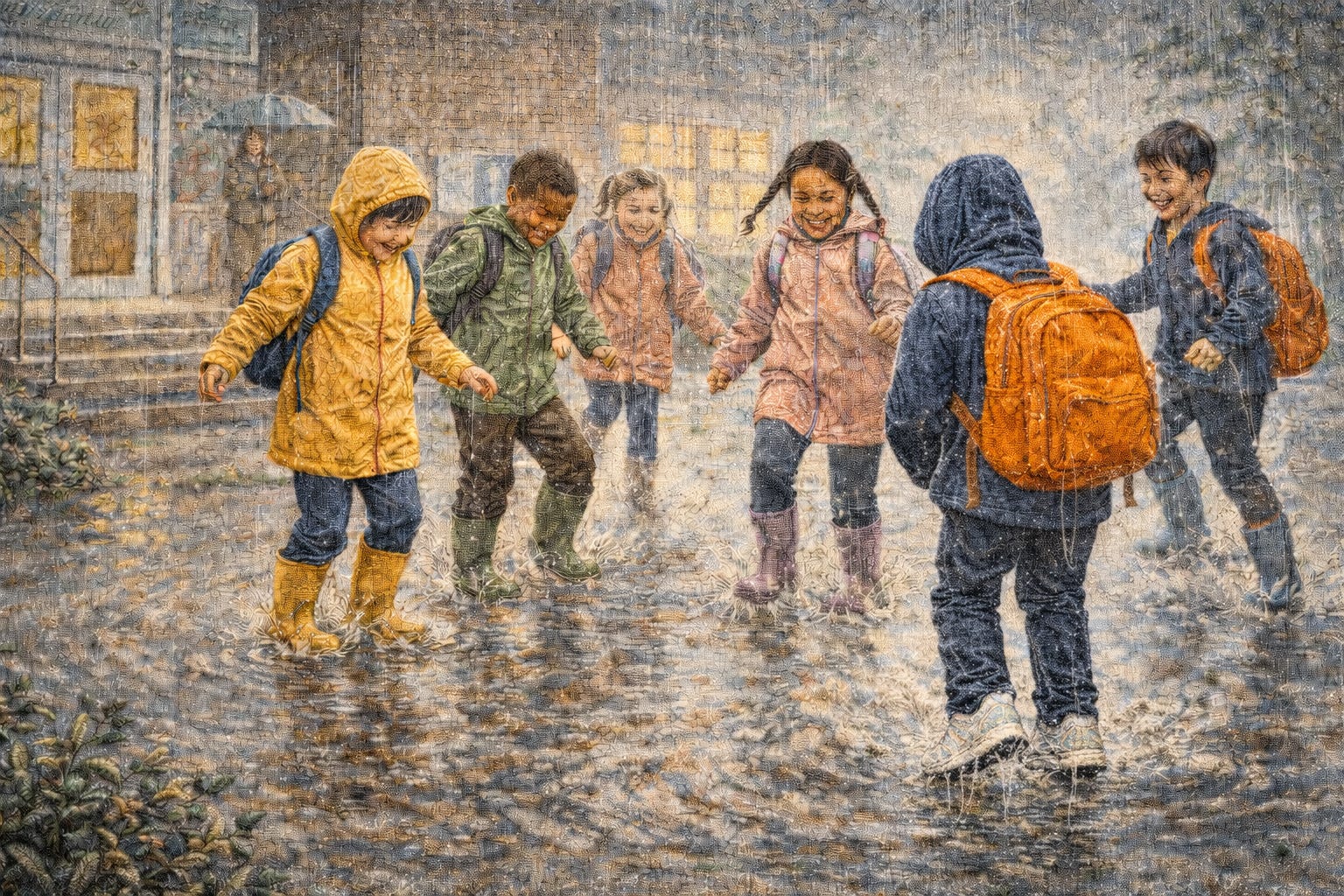
As I dropped my kids off at school, we approached the entrance, and I noticed a cluster of children laughing, screaming, and stomping joyfully in a pool of rainwater.
What caught my attention was not the play.
It was one boy.
All the other children were wearing high rain boots. Thick, protective, waterproof boots. But this boy was wearing regular sneakers. He was already soaked and completely drenched. The fabric was darkened with water, clinging to his foot. In that cold morning weather, his feet would definitely be freezing.
Yet, he was stomping with the others. Same water. Same laughter. Same activity. Very different protection.
That was when the adage struck me.
“Oke soro ngwere maa mmiri.”
So what happens when the rat follows the lizard into the rain?
Well, the lizard has smooth skin. When water touches its skin, it slides off easily. On the other hand, the rat has fur. When water touches its skin, the water stays trapped, making it cold, heavy, and soaked.
If both animals enter the rain, only one could dry off quickly.
Watching those students play in the pool of water that morning reminded me of how often we do this in technology.
Obviously, the boy had only a single sneaker, which was already soaked, heavy, and cold, yet he stayed in the water, trying to keep up with the others.
That moment hit me hard.
This proverb came rushing back because it perfectly explains what we’re seeing today in AI and UX design.
In life, we don’t all enter situations with the same protection, even if we’re standing in the same place.
Not everyone who copies another person’s path can handle the consequences. Some are built differently. Some are protected differently.
Not everyone who follows a path is equally prepared for it. Some have protection. Some don’t.
Understanding the Adage Beyond the Words
In Igbo culture, proverbs are not decorative language. They are frameworks for understanding life.
This proverb teaches a simple but powerful truth.
The lizard and the rat may enter the rain together, but they are not built the same way.
The lizard’s skin, body, and nature allows it to dry off quickly. The rat does not have that advantage. What looks like shared behavior leads to unequal outcomes.
The lesson is not about imitation. It is about context, preparedness, and capability.
And standing there watching that boy, it dawned on me.
This is exactly what we see in UX design and AI every single day.
UX Design and the Illusion of Equality
In UX design, we often assume that if a feature works for one group, it will work for everyone.
If power users can navigate complexity, everyone can. If early adopters understand AI prompts, everyone should. If one demographic succeeds with automation, others should adapt.
But users are not equal in context.
They have different:
Abilities
Access
Cognitive load
Digital literacy
Environmental constraints
Designing as though everyone is wearing rain boots is how users get soaked.
AI Makes This Even More Concerning
AI amplifies this problem.
Because AI systems often learn from dominant user behaviors, they optimize for those users. The lizards. The ones already equipped. Those with:
High literacy
Stable internet
Cultural alignment
Confidence with technology
Meanwhile, others follow into the same systems without protection. Same interface. Same workflow. Different outcome.
And when things go wrong, we blame the user.
Case Study 1: Amazon’s AI Hiring Tool
One of the most cited examples of this issue is Amazon’s experimental AI hiring tool, which was later scrapped.
The system was trained on historical hiring data dominated by male candidates. The AI learned patterns that favoured resumes associated with men and penalized resumes associated with women.
Same system. Same process. Very different consequences.
Amazon publicly acknowledged this bias and discontinued the tool.
This is a classic rat-and-lizard scenario in AI. The system worked for some while it harmed others.
Another UX Case Study: Dark Patterns and Financial Apps
Research by the Norwegian Consumer Council revealed how fintech and subscription platforms use dark patterns that some users can easily navigate away from, while others fall victim due to cognitive overload or lack of experience.
The same interface but different outcomes based on user context.
Again, same rain. Different protection.
The Boy With the Sneakers Is the User We Forget
That boy in sneakers represents users who:
Do not have the right tools
Do not have prior knowledge
Do not have the same safety nets
Are copying behavior they see others get away with
In UX and AI, these are often:
Elderly users
Children
Immigrants
People with disabilities
First-time technology users
When we design without empathy, we invite them into the rain and assume they will dry off.
They will not.
Traditional Wisdom Meets Modern Design
This is why traditional wisdom matters.
Long before UX frameworks, Igbo elders understood context-driven behavior. They understood that copying without awareness leads to harm. They understood that equality of opportunity does not mean equality of outcome.
Good design respects difference.
Great design plans for it.
What This Means for UX Designers and AI Builders
As we move deeper into AI-driven systems, we must ask harder questions:
Who is wearing rain boots in this system?
Who is walking in sneakers?
Who benefits if things go wrong?
Who pays the price?
Human-centered design is not about making everyone do the same thing. It is about ensuring everyone survives the experience.
A Forward-Looking Reflection for Technology
In 2026 and beyond, the most respected designers and technologists will not be those who build the fastest systems.
They will be those who build the safest.
The ones who slow down enough to ask: Should everyone follow into this rain?
Final Thoughts
That rainy morning reminded me that wisdom does not expire.
Technology changes. Human behavior does not.
The rat followed the lizard, not knowing they were built differently.
Our job in UX and AI is to make sure no one is forced into the rain without protection.
References
#BlessingSeries #Technology #UXDesign #AIandEthics #HumanCenteredDesign #InclusiveDesign #DesignThinking #IgboWisdom #UXStorytelling #AIResponsibility