
🔮 #BlessingSeries Issue 48: How Do I Design Accessible Products? Let me explain it as I would to a little child.
The best products aren't designed for "most" people. They're designed so that as many people as possible can use them with confidence, dignity, and ease.

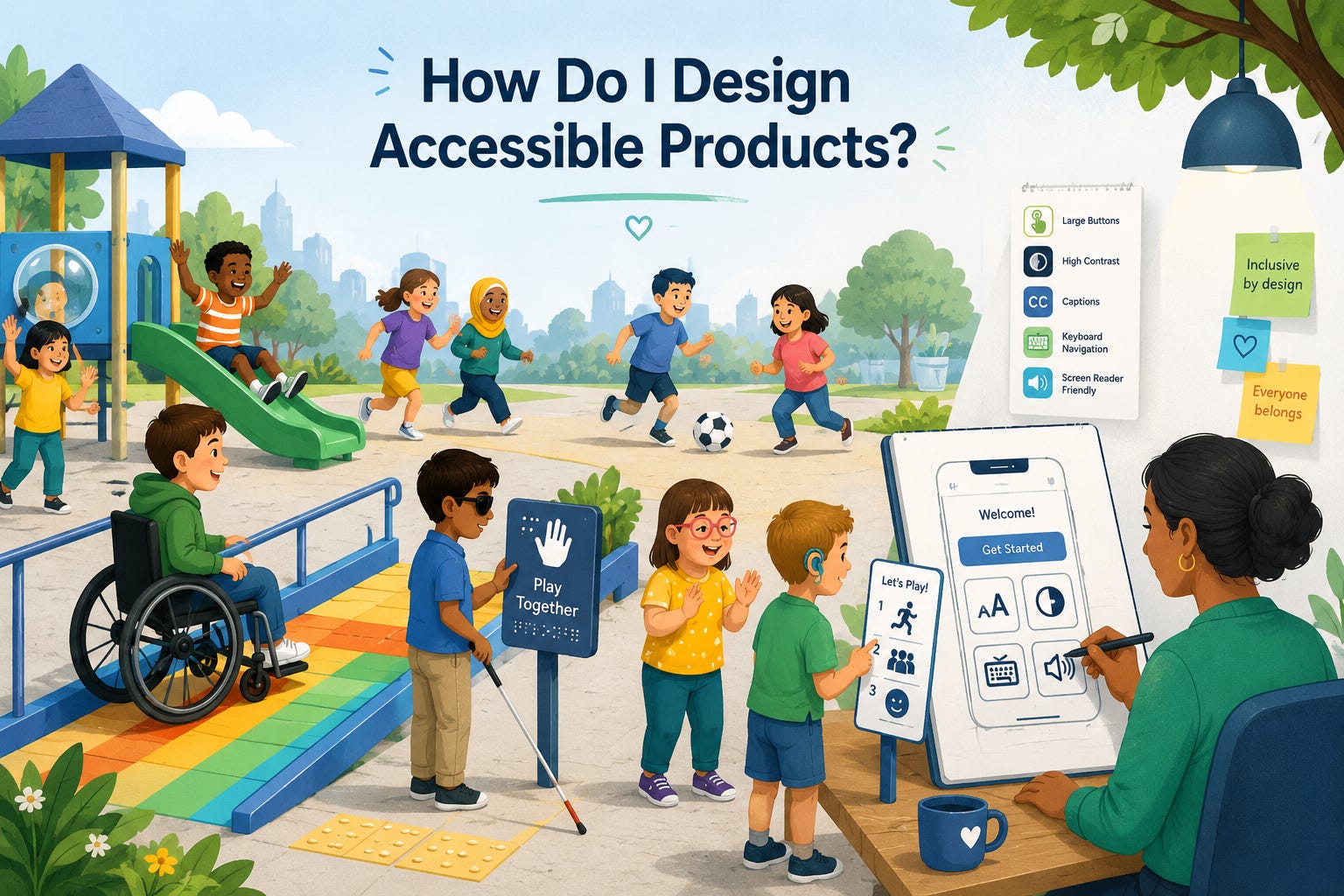
Imagine you’re planning a fun day at the playground.
You bring a football, a skipping rope, and a bicycle. Your friends arrive excited to play.
But then you notice something.
One friend uses a wheelchair and can’t get onto the playground because there are only stairs.
Another friend can’t see very well and can’t read the signs.
Another friend has trouble hearing and misses all the instructions.
Would you tell them, “Sorry, this playground isn’t for you”?
Of course not.
You would find a way to make sure everyone could join the fun.
That is exactly how I think about accessibility when I design products.
Before I draw a screen or choose a color, I ask myself:
Can someone who cannot see well still use this?
Can someone who cannot hear still understand what’s happening?
Can someone who cannot use a mouse still complete the task?
Can someone who thinks or learns differently still feel comfortable using it?
Designing accessible products means making sure as many people as possible can use them, regardless of their abilities.
It’s like building a ramp next to stairs, adding subtitles to a video, choosing easy-to-read text, or making buttons large enough for everyone to tap.
The best part?
Accessibility doesn’t just help people with disabilities.
It helps parents carrying babies, older adults, someone using their phone in bright sunlight, or even a person with a temporary injury.
In other words, when we design for inclusion, everyone benefits.
This is a topic that is especially close to my heart. In fact, my chapter, “Empathy by Design: How AI and UX Shape a More Inclusive Digital World,” in AI Everywhere, Volume 1, explores how thoughtful, accessible, and human-centered design can create technology that truly works for everyone. If you haven’t read the book yet, I encourage you to explore it and discover the inspiring perspectives shared by women contributors from around the world. Learn more at AI Everywhere Books.
So if a little child asked me how to design accessible products, I would simply say:
“Always imagine that someone different from you will use what you’re building. Then make sure they can smile while using it too.”
Because great design isn’t about excluding people.
It’s about making everyone feel welcome.
#BlessingSeries #Accessibility #InclusiveDesign #AccessibleDesign #UXDesign #UserExperience #HumanCenteredDesign #DesignThinking #DigitalAccessibility #ProductDesign #UXResearch #WCAG #UniversalDesign #DesignForEveryone #Innovation #TechForGood #UserCenteredDesign #EmpathyInDesign #AIForGood #FutureOfDesign