
Emotion in Retail UX: What Trader Joe’s Teaches Us About Customer Delight
Emotion isn’t a byproduct of retail UX, it’s the foundation. When customers feel joy, confidence, or connection, they remember.

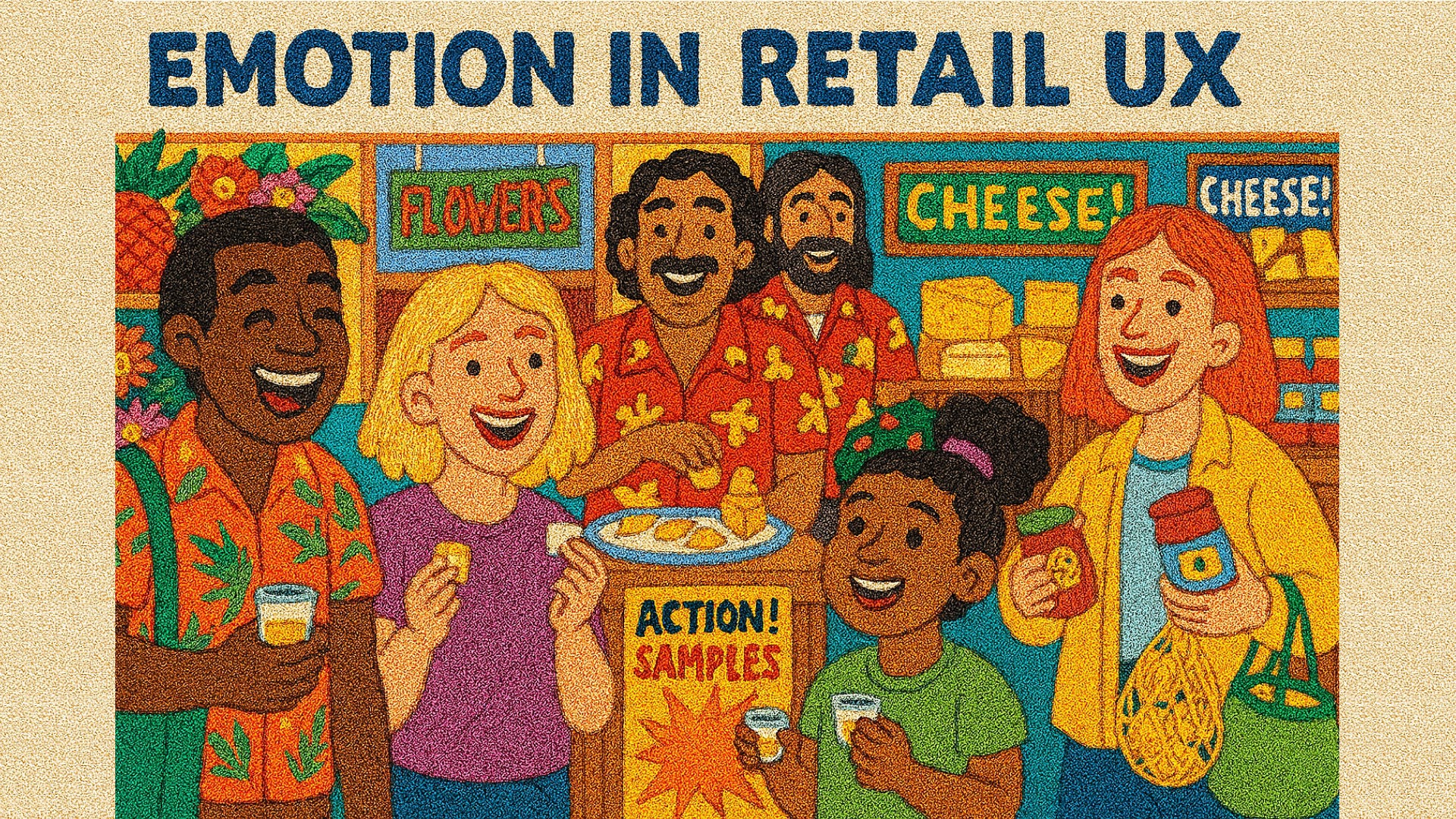
It’s a Saturday afternoon. The store isn’t fancy, with no glitzy lights or high-tech checkout machines. Yet, as you walk through the aisles, you’re greeted by handwritten signs, cheerful employees wearing bright Hawaiian shirts, and the subtle hum of conversations that don’t feel rushed. You grab a sample of something new, laugh at the quirky product names, and notice that despite the line at checkout, people seem genuinely happy to be there.
This isn’t just shopping. It’s an experience.
What makes one retail environment feel like a chore while another sparks joy? The answer often lies not in efficiency, but in emotion-driven UX. And one of the most compelling examples in the U.S. is Trader Joe’s.
Why Emotion Matters in Retail UX
Retail UX isn’t just about product placement or store navigation, it’s about how customers feel during and after their interaction.
A 2020 Deloitte report found that emotional connections drive customer loyalty more than price or convenience. When customers feel delighted, valued, or understood, they return not because they must, but because they want to.
In physical stores and digital retail alike, emotion becomes the invisible differentiator.
Case Study 1: Trader Joe’s – Designing Delight Through Atmosphere
Trader Joe’s has consistently ranked at the top of U.S. customer satisfaction surveys. What’s their secret? It’s not just low prices, it’s how they design for emotion.
Human warmth: Employees are encouraged to be conversational, not transactional. Shoppers report feeling like they are “grocery shopping with a friend.”
Playful microcopy: Handwritten signage, witty product descriptions, and seasonal jokes humanize the shopping journey.
Sampling and discovery: Free samples (a UX “try before you buy”) reduce friction and spark excitement.
Consistency across locations: No matter where you go, you get the same cheerful, approachable vibe.
Lesson: Trader Joe’s proves that emotional UX isn’t about technology, it’s about intentionally crafting human-centered experiences.
Case Study 2: Warby Parker – Emotion in Digital-First Retail
Warby Parker, the U.S. eyewear brand, took a highly emotional approach to something that usually feels clinical: buying glasses.
Virtual try-on: Their app lets customers see how frames look using AR, reducing anxiety around fit.
Home try-on program: Customers can test frames at home, sharing the experience with friends or family before committing.
Playful tone: Product descriptions and emails often read like a conversation, not a sales pitch.
A 2022 report from the American Customer Satisfaction Index (ACSI®) (ACSI) noted that Warby Parker outperformed many traditional eyewear retailers in customer happiness.
Lesson: Emotional UX extends online, where reassurance, playfulness, and flexibility foster delight.
Case Study 3: REI – Emotion Through Community and Values
REI, the U.S. outdoor gear co-op, demonstrates that emotion in retail UX can also stem from shared values.
Community events: Local outdoor classes and excursions connect shopping with lived experiences.
User-first policies: Their famous “Opt Outside” campaign closed stores on Black Friday, prioritizing values over sales.
Seamless omnichannel UX: Whether browsing online, using their app, or shopping in-store, customers feel supported with consistent experiences.
This approach has helped REI maintain one of the highest Net Promoter Scores in retail, as customers feel not just like buyers, but like members of a shared mission.
Lesson: Emotional connection is strongest when retail UX aligns with customer values and community.
Principles of Emotion-Driven Retail UX
Across these examples, a few principles stand out:
Human over Transactional – Train teams to engage warmly and genuinely.
Microcopy Matters – Small words can create big emotional resonance.
Reduce Fear of the Unknown – Sampling, virtual try-ons, and flexible returns ease customer anxieties.
Consistency Builds Trust – From store signage to website tone, users should feel the same warmth everywhere.
Connect to Bigger Stories – Community events or brand values elevate retail beyond purchase to purpose.
Why This Matters Now
In an age where digital and physical retail are merging, emotion is the glue. Shoppers can get groceries, glasses, or outdoor gear anywhere, but they return to brands that make them feel something.
A McKinsey study found that organizations that leverage customer behavioral insights outperform peers by 85 percent in sales growth and more than 25 percent in gross margin.
This isn’t just retail psychology, it’s UX strategy.
Bringing It Back
From Trader Joe’s cheerful aisles to Warby Parker’s playful AR try-ons and REI’s community-driven experiences, one thing is clear:
Emotion isn’t a byproduct of retail UX, it’s the foundation.
When customers feel joy, confidence, or connection, they don’t just shop. They remember. They return.
If you’re designing retail experiences, physical or digital, ask yourself:
Does this spark joy or feel like a chore?
Are we reducing customer anxieties, or adding to them?
Do our values come through in the experience?
Because in retail, emotion is the true competitive advantage.
References
One simple decision: The secret of Trader Joe’s lasting success
Eyewear market share 2024: Luxottica loses sales to Warby Parker
REI #OptOutside Campaign Results Show Power Of Sincerity Plus Engagement
#BlessingSeries #RetailUX #CustomerDelight #UXDesign #HumanCenteredDesign
Thank you for the restack! 🤗